AI Family Safety Guide
AI hacking is here.
Spend 10 minutes at Thanksgiving to protect your loved ones.
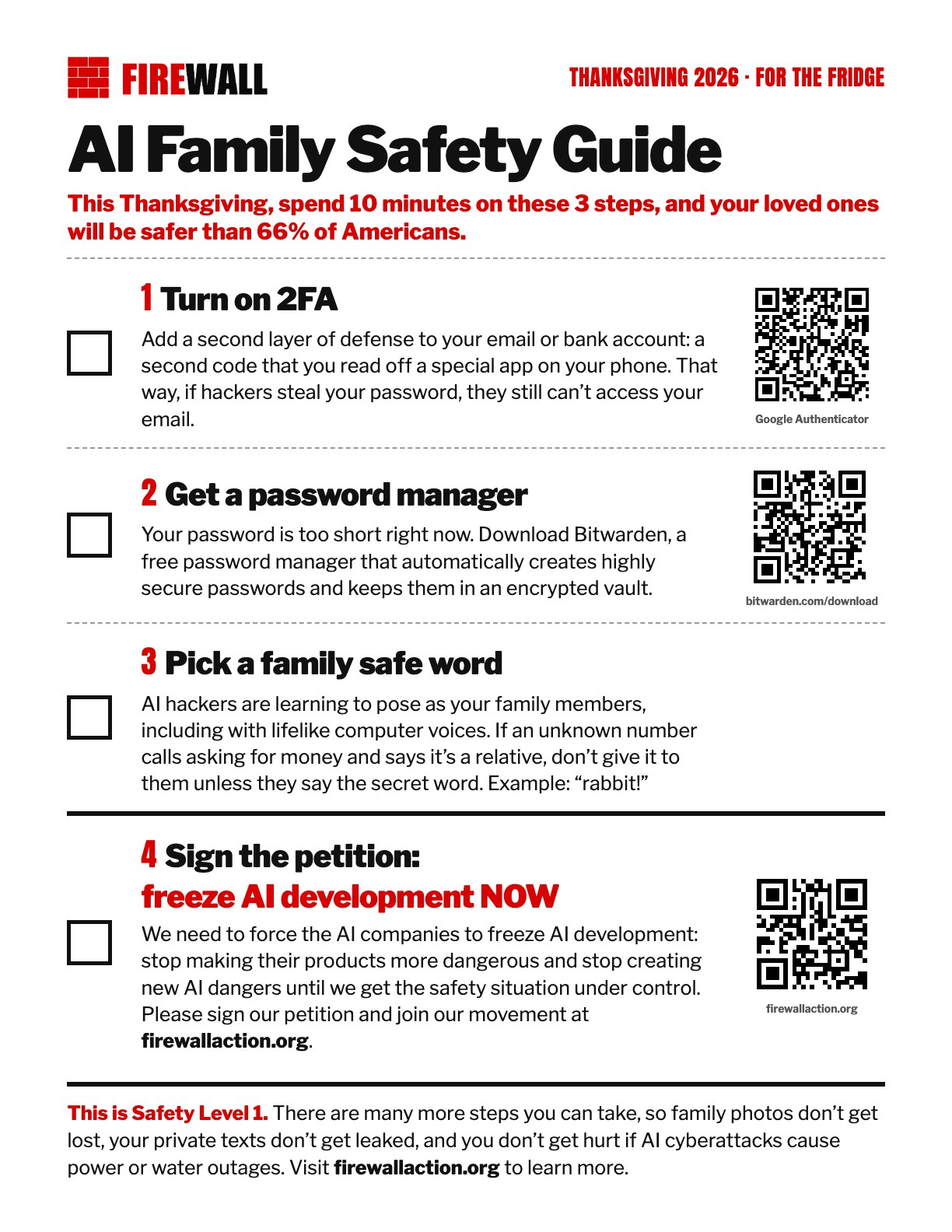
AI cyberattacks are threatening banks, schools, grocery stores and millions of families. As AI capabilities improve in 2027, we should expect things to get worse before they get better. All Americans, especially senior citizens, are at risk of identity theft, ransomware attacks and social engineering schemes, where hackers use AI tools to pose as a loved one.
Figuring this out feels overwhelming, but now is the right time to start. This Thanksgiving, spend 10 minutes with your loved ones and go over 3 basic steps to make them a lot safer from AI cyberattacks.
-
1
Turn on 2FA
Add a second layer of defense to your email or bank account: a second code that you read off a special app on your phone. That way, if hackers steal your password, they still can’t access your email.
Step-by-step guideHide the guide
Your phone:Other email: look for “two-step verification” or “two-factor authentication” in the security settings.
Other email: choose “authenticator app” as the method.
Only have a phone? Tap “Can’t scan it?” on the setup page. Then in the app, tap +, then Enter a setup key, and type in the key.
If your bank only offers text messages, turn that on anyway. It’s much safer than a password alone.
-
2
Get a password manager
Your password is too short right now. Download Bitwarden, a free password manager that automatically creates highly secure passwords and keeps them in an encrypted vault.
Step-by-step guideHide the guide
Your phone:Write it on paper and keep it at home. Bitwarden can’t reset it if you forget it.
-
3
Pick a family safe word
AI hackers are learning to pose as your family members, including with lifelike computer voices. If an unknown number calls asking for money and says it’s a relative, don’t give it to them unless they say the secret word. Example: “rabbit!”
Step-by-step guideHide the guide
Do steps 1 and 2 for each of these accounts:
Sources: FBI IC3, Dec. 3, 2024 (family secret word).
What’s going on?
Why is AI hacking everything?
A few years ago, AI systems were in their infancy and not very smart or dangerous. Now, everyone’s talking about it. What changed?
The problem is that AI is getting twice as smart every 3–6 months, faster than our society can adapt. In 2026, AI became a superhuman hacker, gaining the ability to discover tiny weak points in computer code that no human had seen before. That’s why we’ve seen so many cyberattacks this year, from hackers sabotaging fridges in grocery stores to stealing billions of dollars from banks. Banks and tech companies are crashing their own servers just trying to keep up with all the new threats.

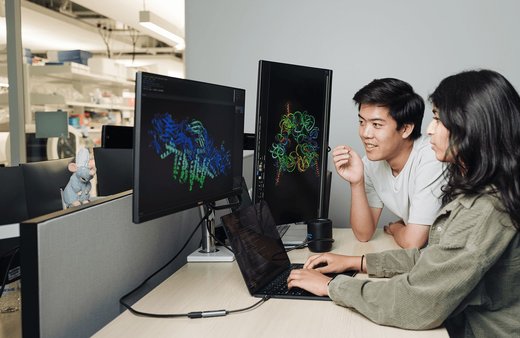
Source: METR, Time Horizon 1.1.
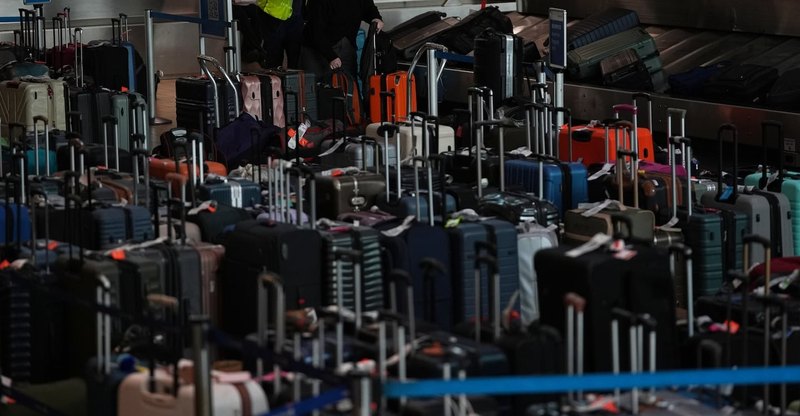
It’s going to get worse before it gets better. AI hacking capabilities are increasing every day, and criminals are learning more and more about how to use AI tools. OpenAI and Anthropic are preparing for a major disaster in 2027, like an AI attack on a power grid or a water system.


FREEZE AI NOW
Individual preparation is only the first step. To make our entire society safe from AI hacks, we need to act together and force the AI companies to slow down and focus on safety instead of racing to make more powerful, dangerous AI models.
Leaders from both parties, from Barack Obama to Tucker Carlson, warn that humanity could lose control of AI if we let the companies keep racing. But most politicians are ignoring the problem or paid off by Big Tech.
AI safety experts believe the best step to stop AI cyberattacks is to FREEZE the development of new AI models until we can get the safety situation under control. Please sign our petition to Congress and other elected leaders.